
Some passages of Scripture become so familiar that we stop hearing them. The parable of the mustard seed is one of those stories.
For most of my Christian life I heard it explained as a lesson about small beginnings. Even the tiniest faith, we were told, can grow into something much greater. There is certainly truth in that, but over the years the interpretation had become so familiar that the parable itself had lost much of its ability to surprise me.
Recently, however, I came across an article by Paul Dazet that sent me back to the passage with fresh eyes. Whether or not every historical detail can be established beyond doubt, his central observation made me ask a question I had never seriously considered before.
Why did Jesus choose mustard?
Why mustard?
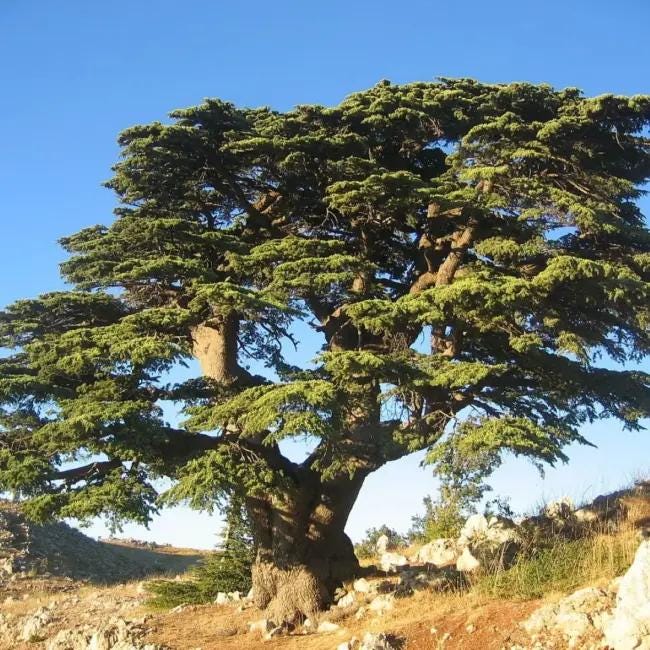
He could have chosen a cedar of Lebanon. Throughout the Old Testament, great trees symbolise powerful kingdoms and empires. Egypt is pictured that way. Babylon is pictured that way. Even Israel’s future hope is sometimes described in similar language. A cedar conveys strength, permanence, grandeur and authority. Its spreading branches also become an image of shelter, where “the birds of the air” find a home. It is exactly the sort of image we might expect Jesus to use for the kingdom of God.
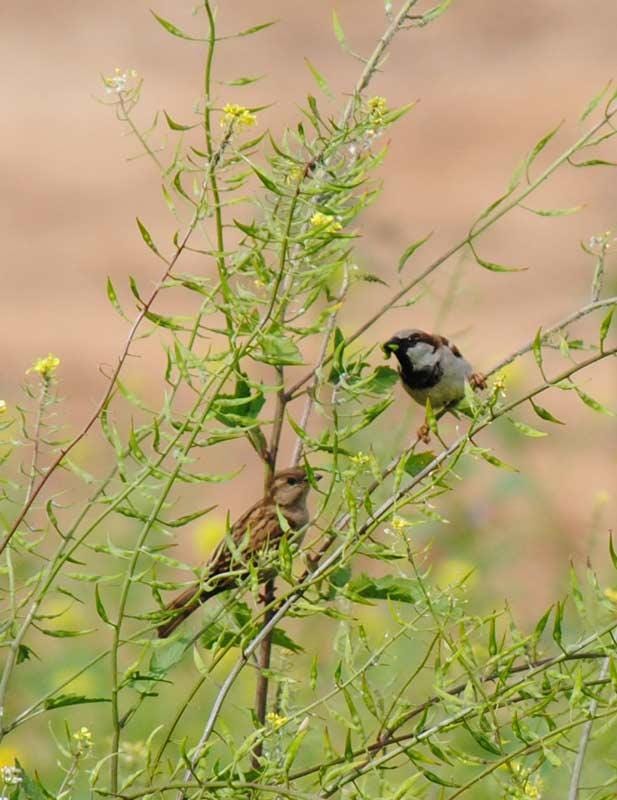
Instead, Jesus chose a mustard plant. Remarkably, Jesus retains that one feature of the picture. The birds still find shelter among the branches. But everything else has changed. The mighty cedar has become an invasive mustard bush. The promise of welcome remains, while the image of imperial power quietly disappears.
Ancient writers describe mustard as vigorous and difficult to contain. Jewish law even regulated where it might be planted because of its tendency to spread into neighbouring crops. It was not the sort of plant one introduced into a carefully ordered garden without expecting consequences.
Whether or not that is the whole point of the parable, Jesus’ choice of imagery is surely significant. God’s kingdom is not compared with the proud cedar that towers over the landscape. It is compared with something much humbler, much less respectable, and much harder to control.
The more I have reflected on that, the more I have wondered whether we have often imagined God’s kingdom in ways that owe more to the kingdoms of this world than to the teaching of Jesus himself.
A Different Kind of Kingdom
Human kingdoms seek visibility. They consolidate power. They build monuments. They create institutions that project stability and permanence. Success is measured by size, influence, wealth and public recognition.
Jesus quietly overturns that expectation.
The more I have reflected on this, the more I have realised that Jesus is not simply giving us a fresh picture of the kingdom. He is asking us to undergo a change of imagination.
We naturally assume that if God’s kingdom is greater than all earthly kingdoms, it must simply be a larger and more perfect version of the same thing. If earthly rulers govern through power, then surely God governs through greater power. If earthly kingdoms establish themselves by strength, influence and control, then God’s kingdom must surely do so even more effectively.
Yet this is precisely the assumption that Jesus quietly dismantles. Just as we have so often projected our own ideas of God onto God himself, so we have projected our ideas of kingship and kingdom onto the reign of God. Jesus does not simply improve our existing picture; he replaces it. His kingdom is not an idealised empire. It is an entirely different order of reality, because it reflects the character of an entirely different kind of King.
That is why Jesus never points us towards the symbols of imperial greatness. Instead he speaks of seeds, yeast, vines, shepherds, children, lost coins and fathers running to embrace their sons. His kingdom does not resemble the kingdoms we already know. It invites us into a completely different way of imagining power, authority and greatness.
His kingdom appears among fishermen rather than emperors. It welcomes children, widows, lepers, tax collectors and foreigners. It grows from below rather than imposing itself from above. Again and again, Jesus chooses images that speak not of domination but of life: yeast working unseen through dough, treasure hidden in an ordinary field, a pearl recognised by only one merchant, and now a mustard plant that refuses to remain neatly within the boundaries assigned to it.
For centuries the Church has not always escaped the temptation to imagine God’s kingdom in imperial terms. In the medieval world, that imagination often found expression in magnificent cathedrals that dominated the skyline of every great city. Many of those buildings remain places of extraordinary beauty and prayer, and they continue to lift our hearts to God. Yet they also reflected an assumption that God’s kingdom should naturally be expressed through grandeur, permanence and visible importance.
Our own generation has not entirely escaped that imagination.
Today we are less likely to build cathedrals than Christian campuses. We admire polished branding, strategic plans, efficient administration and expanding influence. We measure attendance, budgets, online reach and organisational growth. The leaders of large churches are invited to explain the secret of their success. We speak quite naturally of “successful ministries” and “successful churches.”
Beauty is a gift. Good organisation is a gift. Wise administration is a gift. The difficulty comes when we mistake these gifts for the kingdom itself.
How the Kingdom is Recognised
Jesus never suggested that God’s kingdom would be recognised by its ability to impress. He compared it to yeast hidden in flour. To treasure buried beneath an ordinary field. To a mustard plant that respectable gardeners struggled to contain.
But when he finally told his disciples how the world would recognise that they belonged to him, he did not point to miracles, numbers, influence or theological correctness. He said simply:
“By this everyone will know that you are my disciples, if you love one another.” (John 13:35)
The identifying mark of the kingdom is not simply affectionate feeling. It is the humble, self-giving love that Jesus himself embodied when he knelt to wash his disciples’ feet. The kingdom is recognised wherever people quietly serve one another in his spirit.
Paul describes the same reality in another way. The life of Christ produces its own unmistakable fruit: “love, joy, peace, patience, kindness, generosity, faithfulness, gentleness and self-control.” (Galatians 5:22–23). These qualities are not achievements to boast about; they are signs that God’s own life is taking root within ordinary people.
That is the kingdom’s defining mark. Wherever Christ-like love is taking root—patient, truthful, forgiving, self-giving—we are already seeing signs of God’s reign, however hidden or unimpressive they may appear.
That difference seems profoundly important today.
For those of us who grew up after the Second World War, there was a widespread hope that humanity was gradually learning from its mistakes. The defeat of Nazism, the collapse of Soviet communism, increasing international cooperation and expanding human rights all appeared to point towards a more peaceful and civilised future.
Today that confidence has been deeply shaken. War has returned to Europe and the Middle East. Violence dominates the news. Government corruption and authoritarianism are on the rise. We hear disturbing reports of people being detained because they are regarded as “other”, and of degrading treatment carried out in places hidden from public view. Public discourse has become increasingly angry, unforgiving and polarised. Truth itself often seems negotiable, while misinformation spreads with alarming speed. Beneath all these developments lies a deeper and more troubling reality: a growing dehumanisation of other people. It becomes easier to dismiss, fear or despise those who are different from us than to recognise them as fellow human beings. At times it feels as though greed, fear and deception have once again established their authority.
Where, then, is the kingdom of God?
Has truth lost its power? Has love finally proved too weak?
The organic life of the Kingdom
Jesus’ answer is both deeply reassuring and profoundly challenging. He seemed remarkably confident that truth and love possess a life of their own.
That confidence runs through almost every image he uses for the kingdom. Seeds germinate. Yeast quietly transforms the dough. Vines bear fruit. Branches remain connected to the vine. Again and again Jesus speaks the language of living things.
Perhaps that is because the kingdom of God grows organically rather than strategically.
There is, of course, a place for strategy. Churches need organisation, wise leadership and good administration. These are gifts from God. But organisation is not life. No gardener can make a seed alive. The gardener prepares the soil, removes obstacles and tends the growing plant, but the mysterious life within the seed comes from elsewhere.
I wonder whether we have sometimes expected the kingdom to grow as organisations grow: through better planning, clearer structures, stronger branding or greater efficiency. Jesus seems to trust something much deeper. The kingdom grows because God’s own life is at work within it.
That is why the kingdom is never as fragile as we fear. It does not survive because we manage it well. It grows because the life of God can never be extinguished. We may not always recognise where it is taking root, and it may rarely resemble the impressive structures we expect. Yet wherever people discover the freedom to tell the truth, to forgive, to welcome the stranger, to care for the vulnerable and to love without fear, there the mustard seed is already growing.
History reminds us that empires eventually collapse. Institutions rise and fall. Political systems flourish for a season before passing away.
As Mahatma Gandhi is often quoted as saying: “When I despair, I remember that throughout history the way of truth and love has always won. There have been tyrants and murderers, and for a time they can seem invincible. But in the end, they always fall.”
Indeed, Jesus offers a profoundly different way of seeing. Because wherever the life of Christ takes root, something begins that no empire can finally uproot.
He never promised that God’s kingdom would resemble the kingdoms of this world. He never suggested that truth would always appear to be winning or that love would always look stronger than violence. Instead, he compared the kingdom to something small, easily overlooked, yet possessing an extraordinary vitality of its own.
Paul reached for another striking image. Christians, he said, are to be “the aroma of Christ” in the world (2 Corinthians 2:15). An aroma does not coerce. It cannot be wielded as a weapon. It simply spreads quietly, influencing everyone who comes near. That, too, is what the kingdom is like. It is recognised less by the force it exerts than by the life it gives.
One thought has stayed with me above all others.
Jesus seemed remarkably confident that truth and love possess a life of their own.
They do not require coercion in order to survive. They do not depend upon propaganda to sustain them. They cannot finally be secured by power. Like the mustard seed, they may appear insignificant at first, but once they truly take root they are astonishingly difficult to eradicate.
History itself bears witness to that mystery. Empires rise and fall. Political systems come and go. Ideologies enjoy their moment before fading into history. Yet the words of a Galilean carpenter continue quietly to transform lives across every continent.
Not because the Church has always embodied his teaching faithfully. Far from it. The Church has too often borrowed the world’s understanding of power and then wondered why it has reaped the world’s harvest of rivalry, concealment and abuse.
Whenever image becomes more important than truth, reputation more valuable than honesty, or leadership harder to question than Jesus himself, we have already begun to drift away from the kingdom he described.
Our response has often been to write ever more detailed policies. Many of these have a vital place: they protect the vulnerable and establish accountability. Yet no policy, however carefully written, can by itself create the kind of community Jesus came to establish.
That requires something much deeper. It requires a different imagination.
A Different Imagination
Perhaps the first safeguarding question the Church should ask is not simply, “How do we prevent abuse?” Perhaps it is, “What kind of kingdom are we trying to build?” The answer to that question will shape everything else.
Jesus never tried to control people into the kingdom. He trusted the truth. He invited. He questioned. He challenged. He exposed falsehood without coercion and restored failure without humiliation. He trusted the life that God had already placed within them.
That is why the mustard seed has become such a hopeful image for me. Because the kingdom of God is recognised not by the power it displays, but by the life it produces.
It may never look like a cedar.
Perhaps that is precisely the point.
Jesus did not come to establish another empire.
He came to plant a kingdom that no earthly empire could ever uproot.
With grateful appreciation to Paul Dazet (A Wounded Healer’s Journal), whose thought-provoking reflections published on Substack have encouraged me to return to this familiar parable with fresh eyes.
Jeremy Marks, 22nd July 2026
Spot on! Yours is a much needed voice for today.
This is beautiful